Newsletter
Stay up to-date with the latest imaging, analysis and metrology news from Digital Surf.


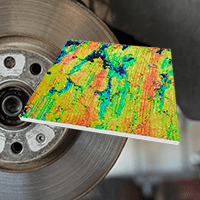
In vehicle braking systems, surface topography plays a critical role in friction, wear and overall function. Understanding how surface structures evolve over time and interact at different scales is therefore essential for improving tribological performance. This challenge is at the core of the research recently conducted by a team of French researchers from the LAMIH UMR CNRS 8201 and LaMcube UMR CNRS 9013 laboratories, authors of a scientific publication investigating multiscale topographical analysis of brake friction.

Huddersfield team develops compact HUD using a single freeform mirror, with MountainsMap® software playing a key role in surface quality analysis.
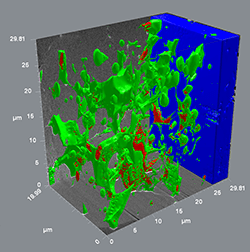
A research team based at JEOL France recently studied the composition of magnetic fields incorporated in direct current electrical motors. In this study, they used a FIB-SEM technique coupled with a specialized analysis software package, based on Mountains® technology.

Researchers at the Luleå University of Technology and Scania in Sweden, recently investigated how surface topography influences oil film formation in tribological interfaces pertinent to gears. The study was oriented towards the improvement of fuel economy and sustainability. Jonny Hansen, a member of the research team, explains how Mountains® software was used to help achieve results.

An automotive manufacturer used Mountains® software to study parameters associated with wear and lubrication.

A French car manufacturer performed quality control of automotive dashboard material (plastic). Measured data was checked to be in compliance with ISO 25178 parameters.

In the automotive industry, engineers used Mountains® to check compliance of components with nominal form.
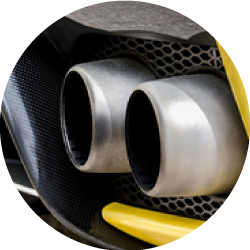
Friction, core and lubrication zones of a motor cylinder were studied in order to investigate opportunities for improving fuel efficiency and thus reduce harmful emissions. Mountains® software was used to provide advanced analysis of the volume of the zones studied.