Newsletter
Stay up to-date with the latest imaging, analysis and metrology news from Digital Surf.







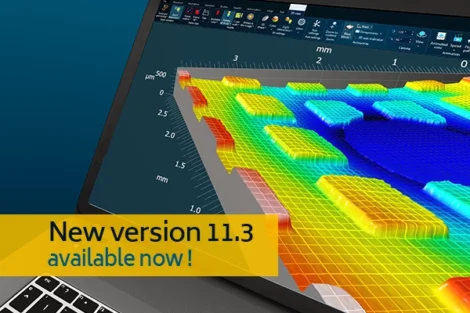
Let’s take a closer look at what’s included in this new release.

We would be pleased to welcome you to our booth at the next SciX conference in Sparks, NV, USA from Oct. 5 to 7.

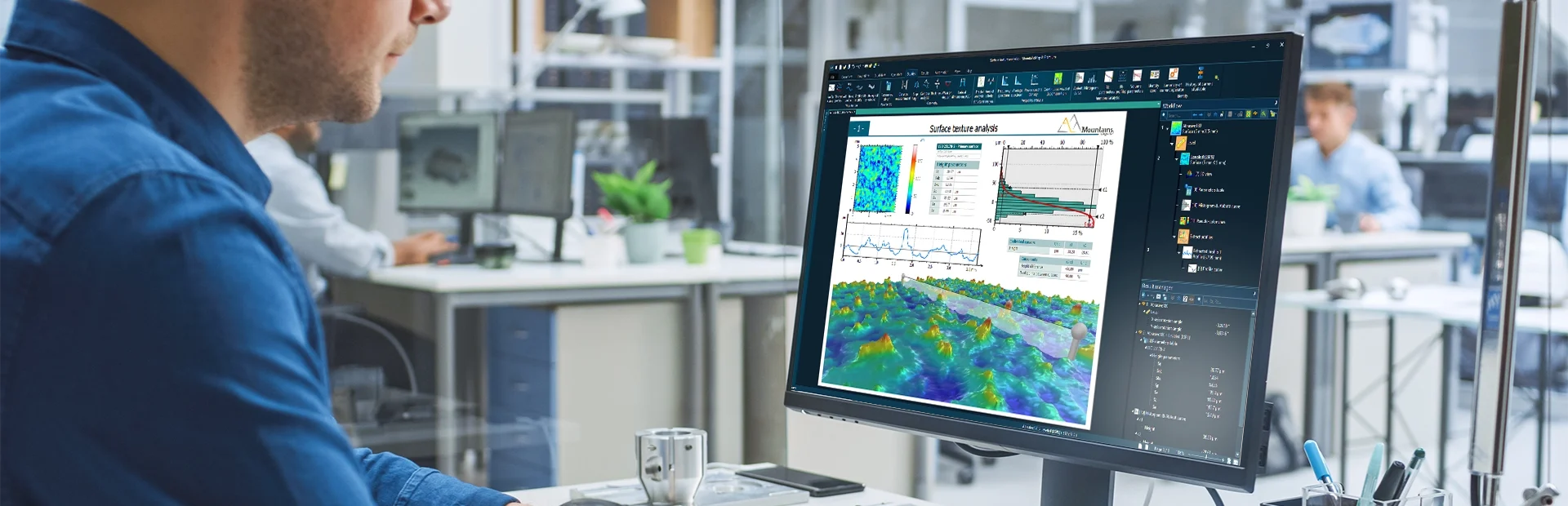
Our main focus is on working as a partner with instrument manufacturers worldwide, in the fields of surface metrology and microscopy. Mountains® software is now offered by the majority of profilometer and microscope manufacturers and is embedded in their equipment or available as an option.
Digital Surf also provides Mountains® software packages directly to instrument users. Mountains® has an installed base of 26,000+ licenses worldwide, is available in 11 languages, supports ISO and national metrology standards and is supplied by 50+ instrument manufacturers.
Application areas include: automotive, materials science, semiconductors, medical, aerospace, MEMS, renewable energy, etc.
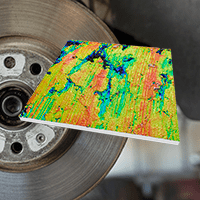
In vehicle braking systems, surface topography plays a critical role in friction, wear and overall function. Understanding how surface structures evolve over time and interact at different scales is therefore essential for improving tribological performance. This challenge is at the core of the research recently conducted by a team of French researchers from the LAMIH UMR CNRS 8201 and LaMcube UMR CNRS 9013 laboratories, authors of a scientific publication investigating multiscale topographical analysis of brake friction.

The semiconductor industry relies on uncompromised metrological precision. The optimal exploitation of AFM data requires powerful and adapted software, capable of transforming raw data into actionable insights. This is where Mountains® software comes into play, offering a high-performance solution for the precise and efficient analysis of Critical Dimensions (CDs) in the semiconductor field.

Dive into our free online surface metrology guide and learn how to characterize surface texture in 2D and 3D using the right parameters and filters
By combining two SEM images acquired at different tilt angles, it is possible to reconstruct a true 3D surface and extract quantitative measurements. One important question remains for many SEM users: can height values of reconstructed SEM topography be trusted? A recent comparison performed on femtosecond laser-machined metallic samples provides a compelling answer.