Newsletter
Stay up to-date with the latest imaging, analysis and metrology news from Digital Surf.


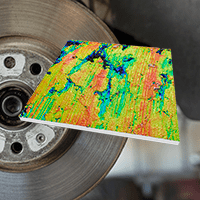
In vehicle braking systems, surface topography plays a critical role in friction, wear and overall function. Understanding how surface structures evolve over time and interact at different scales is therefore essential for improving tribological performance. This challenge is at the core of the research recently conducted by a team of French researchers from the LAMIH UMR CNRS 8201 and LaMcube UMR CNRS 9013 laboratories, authors of a scientific publication investigating multiscale topographical analysis of brake friction.

Huddersfield team develops compact HUD using a single freeform mirror, with MountainsMap® software playing a key role in surface quality analysis.
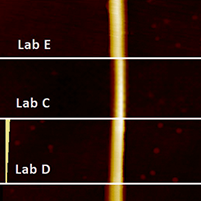
Nanowires (NWs) are of great interest for their useful electrical, electromechanical and thermoelectrical properties. In this study, an inter-laboratory comparison of AFM dimensional and surface roughness characterization on silicon NWs, involving different national metrology institutes in Europe, is reported by researchers Alexandra Delvallée and Luigi Ribotta. The work was led by the Nanometrology and Surface Metrology group at INRiM, the Italian National Metrology Institute.
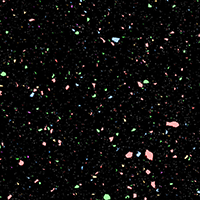
A team of researchers from the Environmental Electron Microscopy Group at the Institute of Scientific Instruments of the Czech Academy of Sciences (Brno, Czech Republic) used dedicated electron microscopy methods for a more comprehensive analysis of quartz micro and nanoparticles.
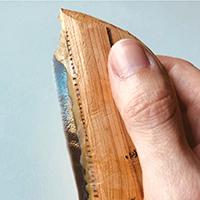
Two researchers discuss how the study of use-wear patterns on stone tools, combined with advanced surface analysis techniques, helps reconstruct the daily lives, technologies and social networks of early farming communities.
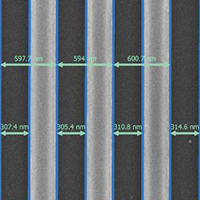
In the semiconductor industry, precise characterization of nanostructures is essential to ensure device performance and reliability. Line Edge Roughness (LER) and Line Width Roughness (LWR) play a critical role in process control. Mountains® software provides a dedicated solution for accurate, automated and robust LER measurements, ensuring reliable results regardless of imaging conditions such as accelerating voltage.
The semiconductor industry relies on uncompromised metrological precision. The optimal exploitation of AFM data requires powerful and adapted software, capable of transforming raw data into actionable insights. This is where Mountains® software comes into play, offering a high-performance solution for the precise and efficient analysis of Critical Dimensions (CDs) in the semiconductor field.
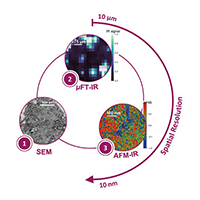
The AFM-IR lab at the Institute of Physical Chemistry, Paris-Saclay University (Orsay, France) is the pioneering research group in Infrared-Atomic Force Microscopy (AFM-IR). In particular, the team specializes in the characterization of complex materials, ranging from astro to biosciences, including studies on pathological calcifications such as breast microcalcifications (MCs), described in this article by Margaux Petay, former AFM-IR lab PhD student.
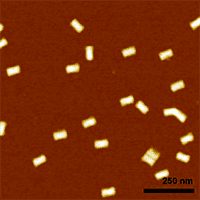
Simone Ruggeri, Associate Professor leading the Nanoscale Microscopy and Spectroscopy group at Wageningen University (WUR), Netherlands, tells us more about his current projects in the development of nano-analytical imaging and spectroscopic technologies to open a new research window of observation with nanoscale sensitivity in chemistry, biology and materials science.
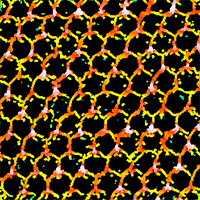
In the realm of dental implantology, understanding bacterial adhesion mechanisms is essential. Recent research led by Steve Papa and fellow researchers at the Jean Monnet University in Saint-Étienne, France, revealed the intricate relationship between surface topography and bacterial adhesion, with a particular focus on Porphyromonas gingivalis, a bacterium closely associated with dental implant failure.
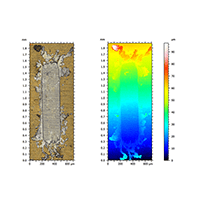
With the introduction of the new Color segmentation tool in Mountains® software, it is now possible to complement topographical wear analysis. Mathieu Cognard, product manager at Digital Surf, explains how MountainsImage® can help visualize & analyze your results.
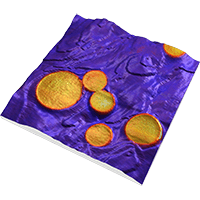
In the last few years, the use of SPM techniques in many areas of research has greatly increased. Professor Philippe Leclere, director of the LPNE at the University of Mons (UMONS) in Belgium, has been studying the impact of this increase and describes how his team is addressing the challenge of analyzing and mapping large quantities of data on material properties at the nanoscale.